Most book clubs don't fail because of the books. They fade because nobody knows whose turn it is to pick, the dates keep moving, or the reading starts to feel like homework. A little structure at the start fixes almost all of that.
You don't need a big group, a perfect reading list or a spotless living room. You need a few people, a date and one book. Here's how to set it up so it's still going a year from now.
Before you invite anyone: three quick choices
- Chatty or serious? Some clubs spend ten minutes on the book and an hour catching up. Others want a real discussion. Both are fine, but say which one you're starting so the right people say yes.
- In person or online? In person is warmer. Online is easier for friends in different cities and for busy weeks. Plenty of clubs mix the two.
- Any book or one kind? A general club reads a bit of everything. A themed club (cozy mysteries, romance, classics, nonfiction) is easier to pick for and tends to attract people who already love the same shelves.
How to start a book club in 8 steps
1. Start with a small group
Aim for five to eight people. That's enough that the conversation still works when two can't come, and small enough that everyone gets a turn to talk. Start with two or three friends and ask each to bring one person. A mix of people who don't all know each other often makes for better talk than a group of close friends who already agree on everything.
No one nearby who reads? Ask at your local library or bookshop, put a note in a neighborhood or workplace group, or start online with friends who live far away.
2. Pick a rhythm and keep it
Once a month is the easiest pace for most people. Choose a fixed slot, like the first Thursday or the last Sunday afternoon, so nobody has to compare calendars every time. A regular date is the single biggest reason clubs last.
3. Choose where to meet
- Homes, taking turns: relaxed and free. The host only needs seats and something to drink.
- A café or quiet pub: no one has to tidy up, and it's easy for new members to join.
- A library meeting room: often free to book, and neutral ground for groups that don't know each other yet.
- A park or garden: lovely in warm months with a blanket and a flask.
- A video call: best for long-distance groups. Keep it to an hour.
4. Make the first book an easy win
For the first meeting, pick something that most people will finish and have opinions about:
- Under about 350 pages.
- Easy to find at the library, second-hand, as an ebook and as an audiobook.
- Something with choices to argue over: a tricky character, a surprising ending, a moral question.
- Not anyone's all-time favorite. It's hard to speak freely about a book the host adores.
Not sure what the group is in the mood for? Have everyone take the one-minute reader type quiz and compare results. It's a fun way to see where your tastes overlap.
5. Decide how you'll pick books after that
Choose one method and stick with it for a few months:
- Take turns. Each month's host picks. Simple and fair.
- Vote on three. One person brings three options and the group votes. Good for groups with mixed tastes.
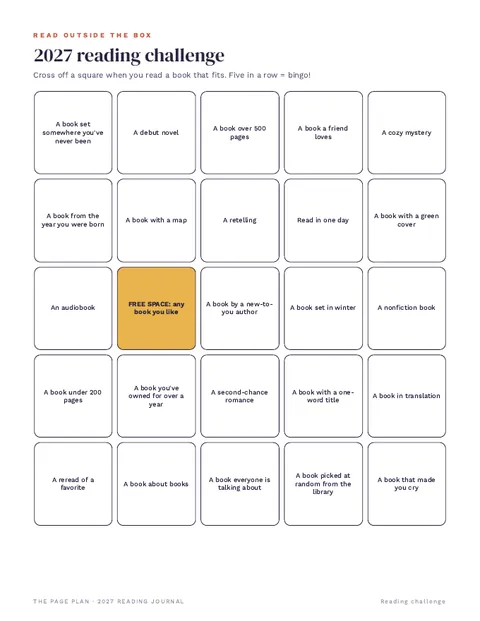
- Follow a theme. A different genre or prompt each month (a book set in winter, a book under 200 pages, a debut). Our reading challenge ideas work well as monthly themes.
Whatever you choose, pick the next book before the meeting ends. Clubs stall when the choice gets left to the group chat.
6. Set a reading pace everyone can keep
A month feels long until the last week. Help everyone by turning the book into a small daily number. Put the page count and your meeting date into the free reading plan calculator and share the result: "about 12 pages a day and we're all done by the 4th" is much friendlier than "read the whole thing".
For longer books, a midway check-in in the group chat ("no spoilers past chapter 15") keeps people going.
7. Plan a simple first meeting
An hour and a half is plenty. A loose plan stops the evening from drifting:
- First 20 to 30 minutes: arrive, snacks, catch up.
- Quick round: everyone gives the book a score out of five and one sentence on why. This gets every voice in the room early.
- 45 minutes or so on the book: bring 8 to 10 open questions. Our list of book club questions for any book has 68 to choose from.
- Last 10 minutes: choose the next book, date and host.
8. Make it easy to stay in touch
Set up one group chat for dates, the current book and the occasional "I can't believe chapter nine". Keep a shared note with the books you've read and everyone's scores. In a year, that list becomes one of the nicest things about the club.
A few friendly ground rules
Agree on these at the first meeting and you'll avoid most awkward moments later:
- Come even if you didn't finish. The ending will be discussed, so expect spoilers.
- Disagree with the book, not the person. "I didn't believe that ending" is great. "How could you like that?" is not.
- Everyone gets a turn. The host makes room for quieter members.
- Any format counts. Paper, ebook, audiobook, library copy. Reading is reading.
- Keep costs low. Choose books that are out in paperback or easy to borrow, and keep hosting simple.
Common book club problems, and easy fixes
- Nobody finishes the book. Pick shorter books for a while, leave more time between meetings, or share a daily page target from the reading plan calculator.
- One person does most of the talking. Use rounds: go around the circle for the first answer to each question, then open it up.
- The chat takes over and the book gets five minutes. Split the time on purpose: catch up first, then a clear "right, the book".
- Fewer people come each month. Check the day and time still suit everyone, and invite one or two new members. A fixed date and a book chosen in advance bring people back.
- You can never agree on a book. Switch to taking turns. Everyone reads one pick they wouldn't have chosen, and everyone gets their month.
- The group is stuck in a rut. Try a new genre, a short story month, or a night where everyone brings a different book on the same theme.
Tips for an online book club
- Keep calls to about an hour. Video is more tiring than a sofa.
- With more than six people, take turns answering each question so nobody talks over anyone.
- Post the questions in the chat a day or two before, so people can think ahead.
- Agree on a spoiler rule for the chat between meetings, such as a chapter everyone should have reached by a certain date.
First meeting checklist
- Date, time and place sent to everyone a few weeks ahead.
- Book chosen and easy to get in more than one format.
- Daily page target shared with the group.
- 8 to 10 questions printed or saved on your phone.
- Drinks and something small to eat.
- A plan for choosing the next book before everyone leaves.
That's all a book club needs. Send the first message today, pick a date, and let the book do the rest.
Give your club a daily page target.
Enter the book's page count and your meeting date, and get a simple pages-a-day number to share with the group. Free, no sign-up.
Open the reading plan calculatorQuestions people ask
How many people should be in a book club?
Five to eight is a comfortable size. It is enough people that the talk keeps going when two can't make it, and small enough that everyone gets a turn. You can start with three or four and grow slowly.
How often should a book club meet?
Once a month suits most groups. It gives people time to get the book and read it without rushing. Every six weeks works well for long books or busy seasons.
How long should a book club meeting last?
Plan for about an hour and a half: 20 to 30 minutes to arrive and catch up, 45 minutes to an hour on the book, and a few minutes at the end to pick the next read and date.
Do you have to finish the book to come to book club?
That is up to your group, but most friendly clubs say come anyway. Agree at the start that the ending will be discussed, so anyone who hasn't finished knows to expect spoilers.