You used to finish a book in a weekend. Now the same novel has been on your nightstand for three weeks, bookmark stuck on page 41. You open it, read a paragraph twice, and reach for your phone instead. That's a reading slump, and it doesn't mean you've stopped being a reader. It usually means you're tired, busy, or reading the wrong book for this moment.
The fix is almost never "try harder". It's making reading feel easy and rewarding again, one small win at a time.
Why reading slumps happen
Most slumps have one of a few causes. Spotting yours makes it easier to pick the right fix:
- The book itself. You're pushing through something slow, heavy or just not for you, and it's blocking everything else.
- Too much going on. Stress, a new job, a new baby, the holidays. Reading needs a bit of spare attention, and right now you don't have much.
- A book hangover. You just finished something you loved and nothing else measures up yet.
- Pressure. A yearly goal you're behind on, a challenge list, a buddy read deadline. Reading started to feel like a chore.
- Screens. Short videos and scrolling train us for quick hits, so the first few pages of a book feel slow by comparison.
1. Put down the book that stalled you
If one book has had you stuck for weeks, set it aside. You don't have to quit it forever. Slide a bookmark in, put it back on the shelf and start something else. Very often the slump was just that one book.
2. Read something short
Finishing a book is a great feeling, and a short one gets you there fast. Try a novella, a short story collection, a slim poetry book or a middle grade novel you missed growing up. Anything under 200 pages works. One finished book is often all it takes to get your momentum back.
3. Reread an old favorite
A comfort reread takes almost no effort. You already know you love it, there's no risk of disappointment, and you can drift in and out without losing the thread. Plenty of readers keep one or two "slump books" on the shelf for exactly this.
4. Switch formats
If print feels heavy, try an audiobook on a walk, while cooking or on your commute. Ebooks on your phone fit into the small gaps where you'd usually scroll. Graphic novels and illustrated books are another great way back in. It all counts as reading.
5. Try a completely different genre
If you've read ten fantasy books in a row, your brain might want a change. Pick up a cozy mystery, a memoir, a romance or a fast thriller. Not sure what you're in the mood for? The free reader type quiz takes a minute and suggests tropes and moods to try next. Our lists of cozy mysteries and cozy fantasy are easy places to start.
6. Lower the bar to five pages
Forget chapters. Promise yourself five pages, or five minutes, a day. On most days you'll keep going once you've started, and on the days you don't, you've still read. Small streaks rebuild the habit better than one big Sunday session.
7. Pause or shrink your reading goal
If a yearly number is making you anxious, change it. Lower it, pause it for a month or switch to a goal like "read for fun every weekend". A goal is supposed to help you read, not make you feel behind. If you want to reset it to something realistic, here's how to set a reading goal you'll actually enjoy.
8. Change where and when you read
Try reading somewhere new: a café, a park bench, the bath, a different chair with a blanket and a lamp. Or move your reading time. If you always try at night and fall asleep after a page, read with your morning coffee or at lunch instead.
9. Leave your phone in another room
This one is simple and it works. Put your phone in a drawer or charge it in the kitchen for 20 minutes and keep only the book within reach. Without the pull of notifications, the first few pages stop feeling slow.
10. Make it a game
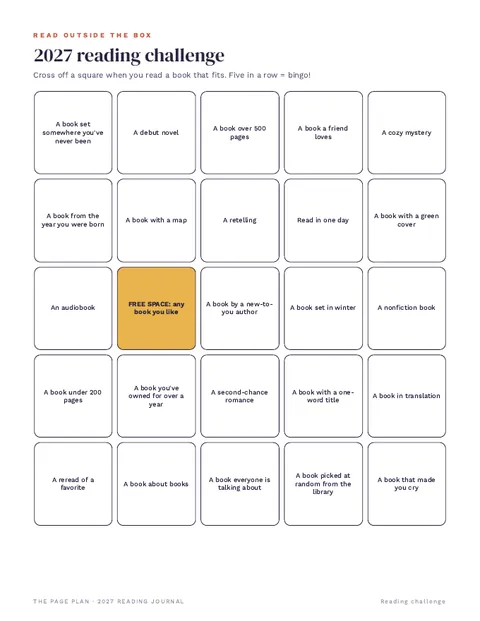
A little fun goes a long way. Deal yourself a card of trope bingo and try to stamp one square this week, or spin up a few random prompts with the reading challenge generator. A tiny, playful goal feels very different from a number on a tracker.
11. Read with someone
Ask a friend to read the same short book this month and text each other as you go. A buddy read or a book club gives you a reason to open the book, and talking about it is half the fun. If you're starting a group, our book club questions for any book will keep the conversation going.
12. Give yourself a real break
Sometimes the best fix is no fix. If life is full right now, it's fine to step away from books for a week or two. Watch a good series, listen to podcasts, rest. Most readers come back hungry for a story, and that first book after a break is often a great one.
A 7-day plan to get reading again
- Day 1: Shelve the book you're stuck on. Pick something short or a favorite reread.
- Day 2: Read five pages with your phone in another room.
- Day 3: Try an audiobook on a walk or during chores.
- Day 4: Read somewhere new for 15 minutes.
- Day 5: Take the reader type quiz and line up your next book.
- Day 6: Text a friend about what you're reading, or invite them to read along.
- Day 7: Finish your short book, or simply notice how many pages you read this week.
Keep a quick note of every day you read. The free reading streak tracker lets you tap each day, and watching the streak grow is a gentle nudge to keep it going.
Signs your slump is ending
You catch yourself thinking about a character during the day. You read "just one more chapter". You start adding books to your to-read list again. When that happens, ride it, but keep the pressure low for a while. The habits that pulled you out of the slump are the same ones that keep the next one short.
Not sure what to read next?
Answer a few quick questions and get your reader type plus tropes and moods to try. No sign-up.
Take the quizTap each day you read, grow your streak and print a year-at-a-glance calendar.
Tap the days you read. Watch the calendar glow. No sign-up.
Start my streakQuestions people ask
What is a reading slump?
A reading slump is a stretch of days or weeks when you can't get into any book. You start books and drift off, or you don't feel like picking one up at all, even though you normally enjoy reading.
How long does a reading slump last?
It varies. Some last a few days and some last a couple of months. Slumps usually end faster when you lower the pressure: read something short or familiar, drop any goal that feels heavy and let yourself read in small bits.
What should I read to get out of a reading slump?
Pick something short, fast or comforting: a novella, a reread of a book you loved, a graphic novel, or a book in a genre you don't usually read. Audiobooks also help because they take less energy than reading on a page.
Should I stop a book that is causing my slump?
Usually, yes. If one book has stalled you for weeks, set it aside. You can come back to it later. Starting something you're excited about is the quickest way to get moving again.